Most sales CRMs are built for a B2B pipeline: a handful of big deals, long sales cycles, a salesperson working each account for months. A car dealership is nothing like that. You have hundreds of enquiries a month, from a dozen sources, that need a reply today, a test drive this week and a delivery next month, across new, used and demo stock and sometimes several brands.
A generic CRM can be bent into shape. But you'll spend years fighting it, and your consultants will quietly go back to spreadsheets and sticky notes. An automotive CRM starts from how a showroom actually works.
Where generic CRMs fall down on a dealership floor
- They think in deal stages, not days. Car sales follow-up runs on "who am I calling today?", not "which stage is this opportunity in?".
- Lead sources are an afterthought. Carsales, Drive, manufacturer leads, Facebook lead forms and your own website all arrive in different formats. Someone ends up copying and pasting.
- There's no stock. A lead without a vehicle attached is half a lead.
- Test drives, licences and trade-ins don't exist. They get squeezed into notes fields.
- Allocation is manual. Leads sit in a shared inbox until somebody grabs them, usually the loudest consultant.
- Reporting stops at "closed won". There's no gross, no finance and accessories, and no link back to which campaign sold the car.
10 things a car dealership CRM should do
1. Put every lead source in one pipeline
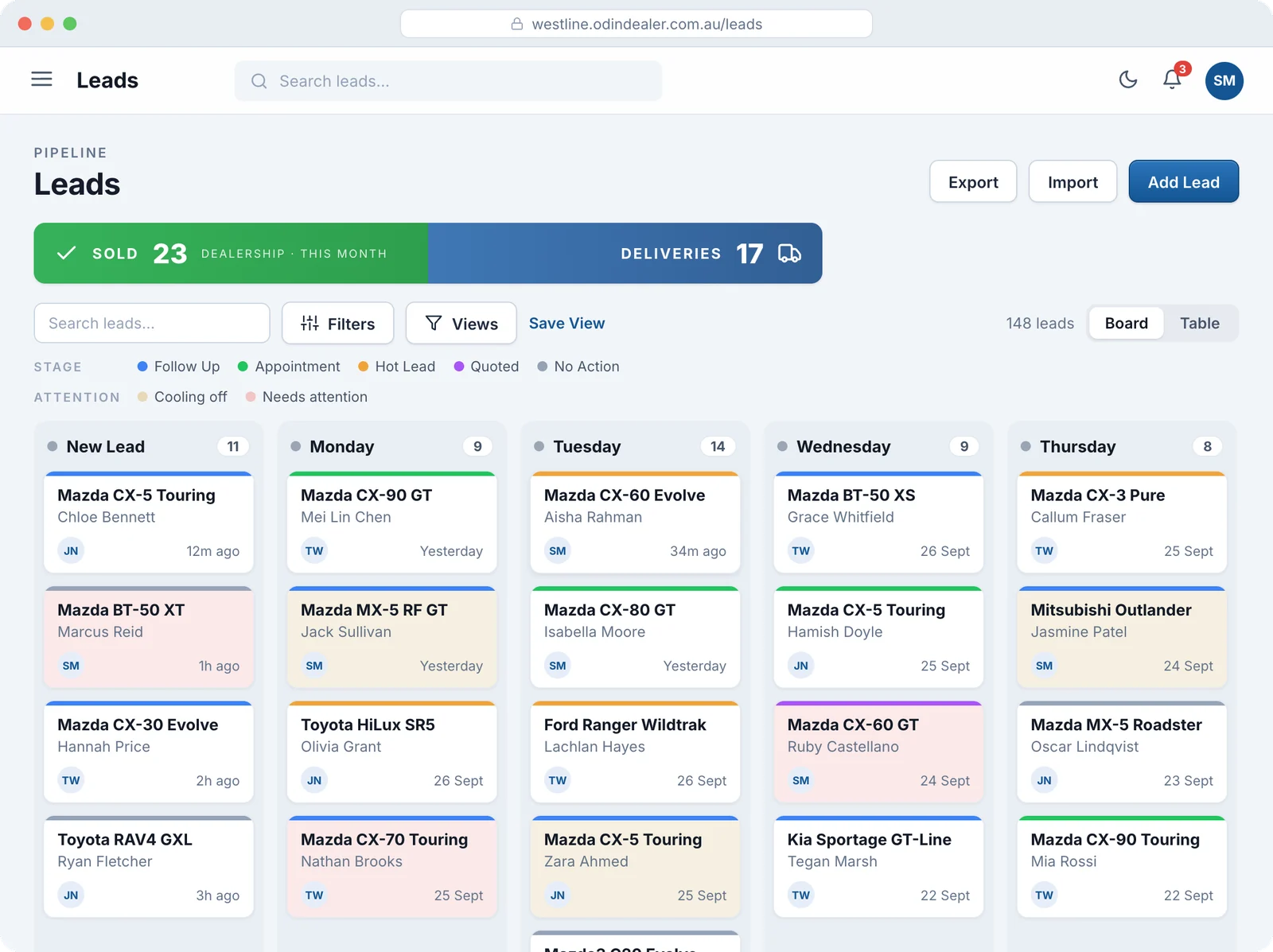
Carsales, Drive, manufacturer leads, website forms, Facebook and Google ads, chat, phone calls and walk-ins should all land in one place, tagged with where they came from. No copying and pasting.
2. Allocate leads fairly and fast
Round-robin allocation gives every new lead an owner straight away, and skips anyone who's on leave. Departments and brands get their own rules.
3. Plan follow-up by day
Consultants should open the CRM and see today's calls. Moving a lead to Thursday should be as easy as dragging it there.
4. Warn you before a lead goes cold
Leads that haven't been contacted in a while should look different, so managers can spot them without running a report.
5. Keep the whole story on the lead
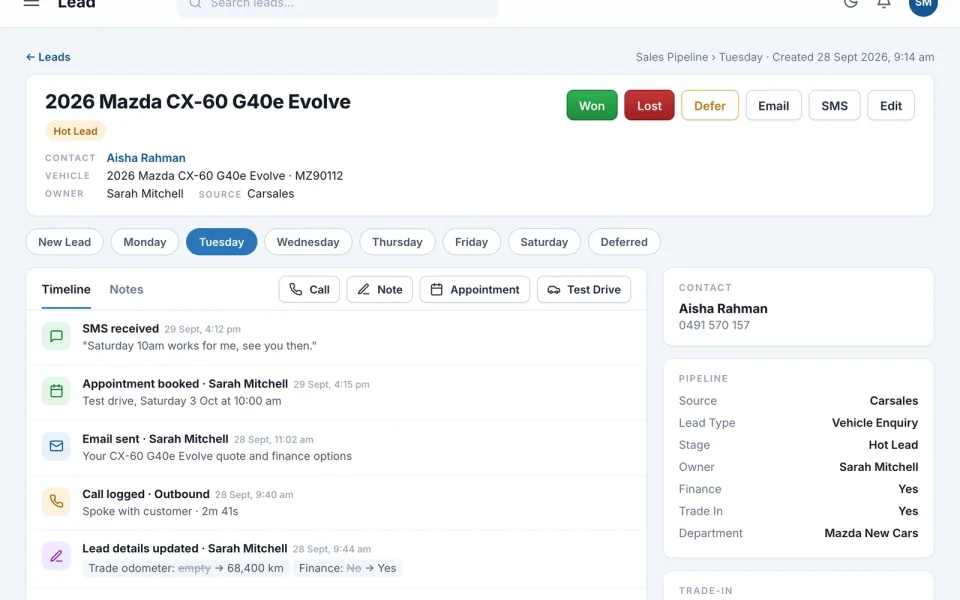
Calls, notes, emails, SMS, appointments, test drives, trade-in details and finance, on one timeline, with a record of every change.
6. Send SMS and email from inside the lead
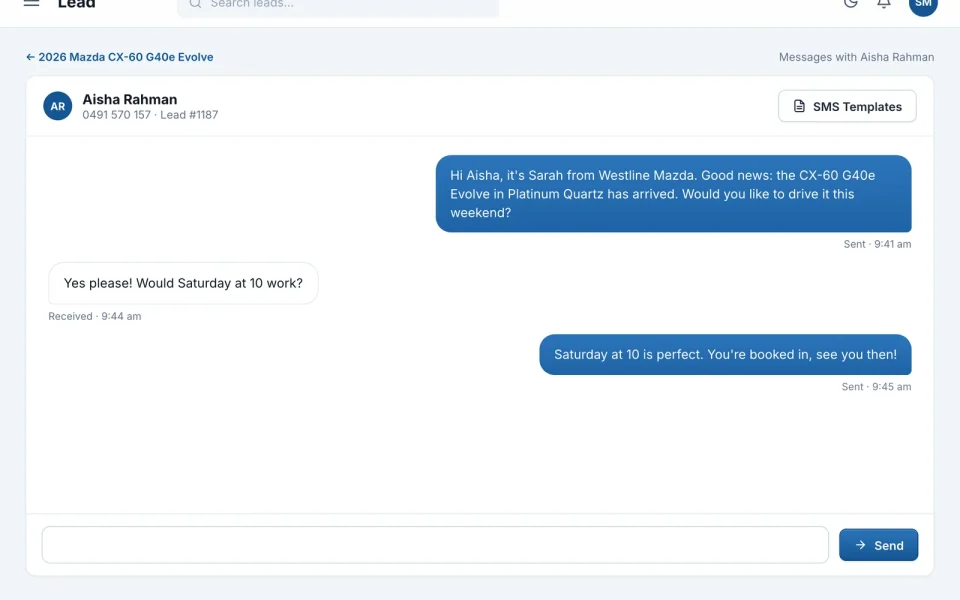
Two-way SMS where replies land on the right lead, and inboxes synced so emails are matched automatically. If a consultant texts from their personal phone, that conversation is lost to the dealership.
7. Automate the chasing
Timed SMS and email follow-ups that go out from the salesperson's own mailbox, within business hours, and stop when they should.
8. Handle test drives properly
Licence photo, signature and agreement captured on a phone, with the test drive linked to the customer's lead, and licence details kept private to managers.
9. Know your stock
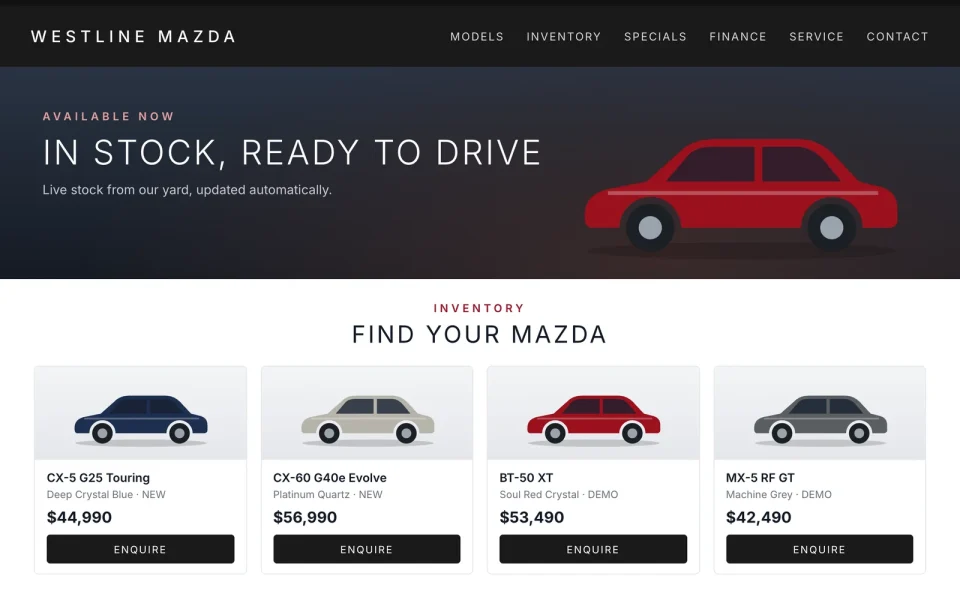
New, used and demo stock fed from your DMS, attached to leads, and ideally feeding your website so sold cars disappear by themselves.
10. Report on what actually sells cars
Leads by source, response times, win rates, lost reasons and consultant performance. And the money: gross, finance and accessories, tracked as deals happen, against targets.
Questions to ask in any CRM demo
- Show me a Carsales lead arriving. Who gets it, and how fast?
- What does a consultant see when they log in at 8.30 am?
- How does a test drive get recorded, and where does the licence photo go?
- If a customer replies to an SMS, where does the reply land?
- Can I see which campaign sold last month's cars, not just which ones got clicks?
- How does stock get in, and what happens when a car sells?
- Where is our data stored, and how do staff sign in?
- How long until we're live, and who trains the team?
- Who do I call when something breaks, and where are they based?
- Do I have to buy your marketing to use your CRM?
How Odin answers them
Odin Dealer CRM was designed by automotive sales professionals and built in Perth for Australian dealerships. Every lead source lands in one pipeline, round robin allocates it (skipping staff on leave), and consultants plan the week by dragging leads between days. Lead heat flags customers going cold. Two-way SMS, synced inboxes and automations keep follow-up moving, and test drives are signed off on the consultant's phone and attached to the right lead. Stock flows in from your DMS, whatever you run, and the Sales Tracker shows the dealership's income in real time.
Data sits in Australian data centres, staff sign in with Google or Microsoft, and setup is typically done within 7 days. And no, you don't need our marketing to use it.
See it on your own showroom floor. We'll bring Odin to your dealership and demo it on your stock and your lead sources. Book a demo.